Photographer Antony Anderton had a brilliant idea a few years ago.
He had dug up the diaries of Aussie geologist Logan Jack’s overland escape from China during the 1900 Boxer rebellion and decided to retrace his steps.
Logan Jack stayed in one particularly remote and mountainous village called Maha (麻哈), in southern Sichuan, between 11 July and 10 August 1900. Overlooking the impressive Yalong (雅砻) river, at the time it was at least two weeks walk with military entourage from Chengdu, the provincial capital of Sichuan, China.
Earlier this year, I too happened to be in Chengdu in early August and had the opportunity to help Antony Anderton’s project by visiting modern Maha village. These days Maha village is about 10 hours' drive from Chengdu. Much less, no doubt, if you know where you’re going!
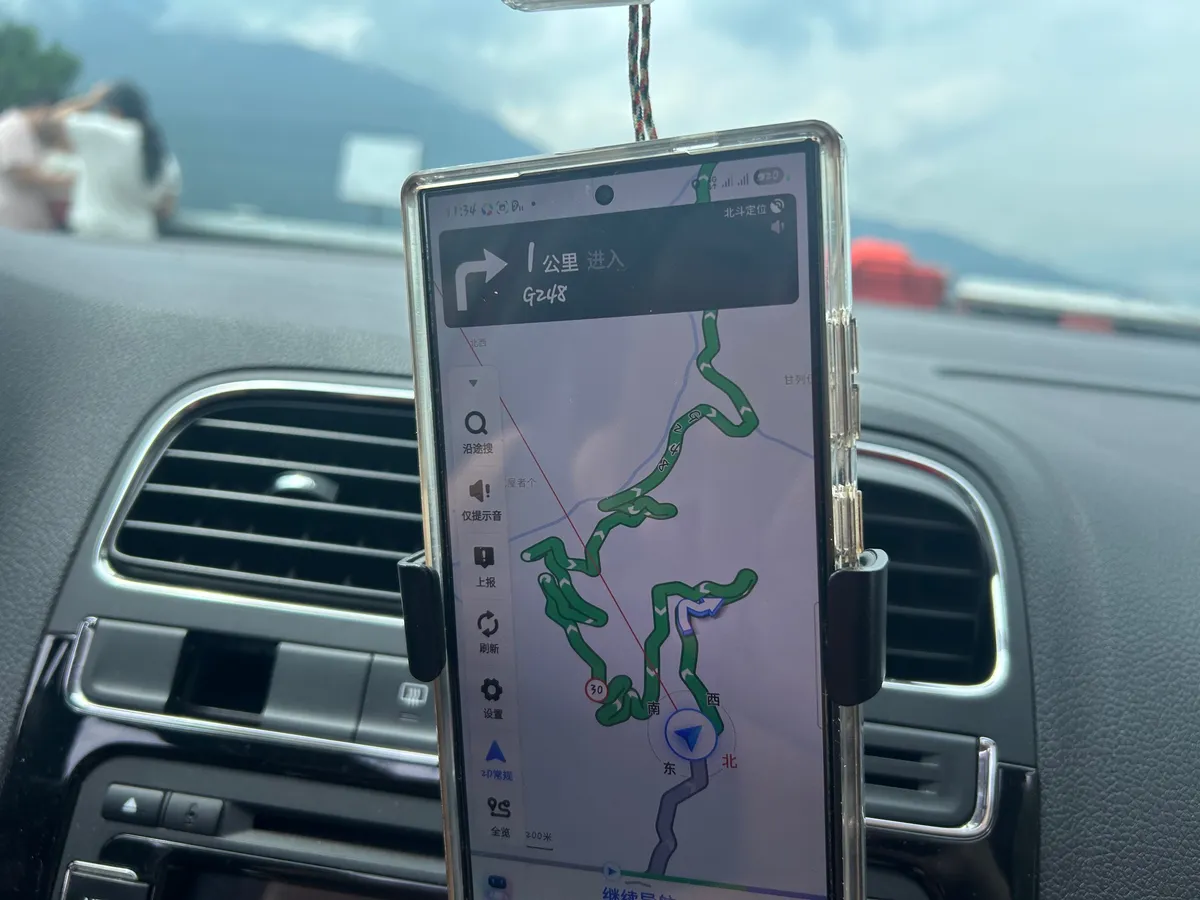
Our first stop on the way was the engineering marvel that is the freeway to Xichang, Sichuan. It’s a masterpiece of tunnels and bridges that casually includes what was until recently the world’s highest vehicle bridge and a corkscrew tunnel inside a mountain.
After glamping overnight at a freeway campsite, we branched off the Xichang highway for a rest at Shimian (石棉), which happened to have a branch of ‘Luckin Coffee’, China’s answer to Starbucks. It was China’s Singles Day, so we got to watch the baristas handle huge numbers of deliver orders. The flat whites were pretty good!
From Shimian, four lane roads quickly became two lanes, then one lane. We often found ourselves behind cargo trucks crawling up and down mountains with steam pouring from the engine. But we were able make up time when the trucks pulled in to fill up their water reservoirs at one of the many roadside stops to prevent overheating.
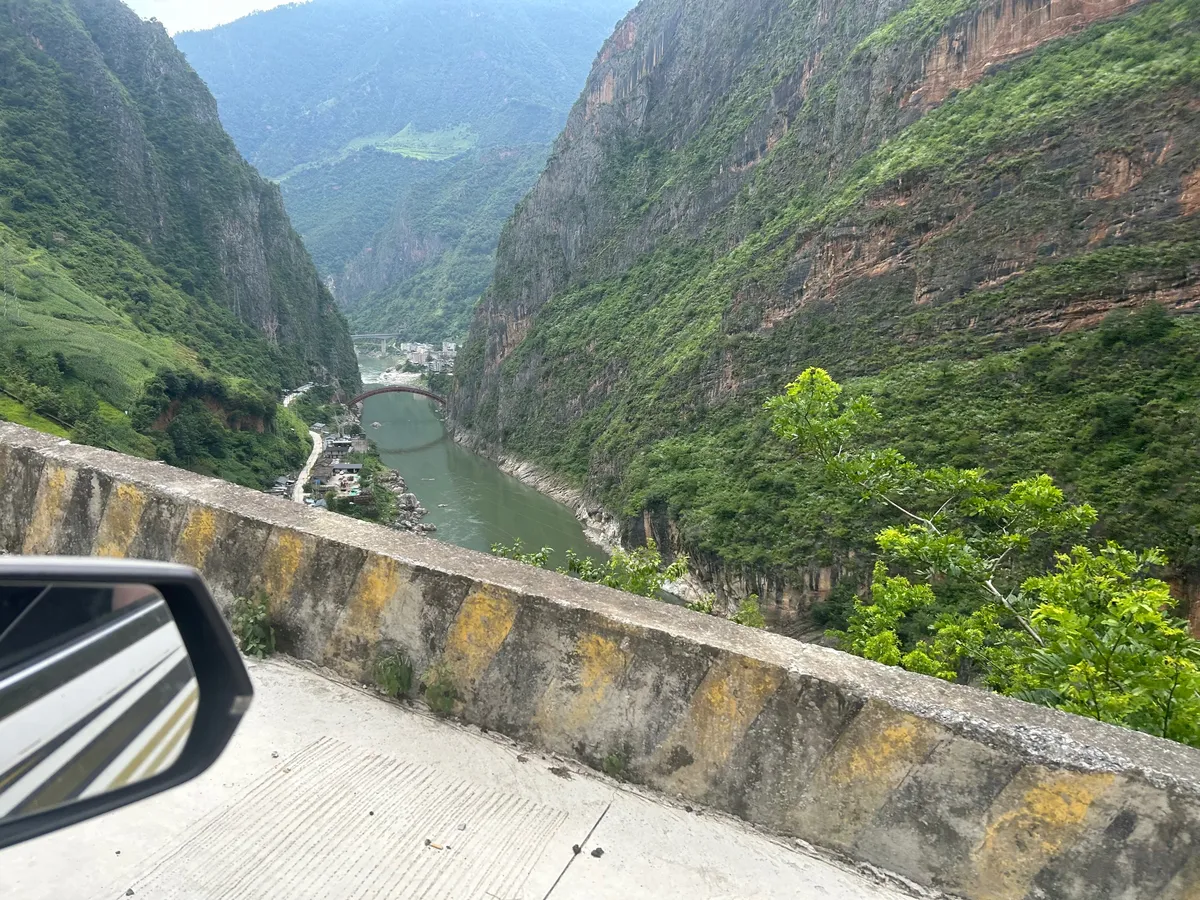
We stopped at a town close to Maha to take stock at a restaurant called ‘Three Sisters’. The food was incredible! Over lunch, the scene that unfolded was classic small-town curiosity: locals gathering to puzzle over what we were up to, everyone surprised we mentioned where we were going, and even more so hear that an Australian had lived in the area 125 years ago.
One of the sisters explained we needed a driver with passes for the local roads to be able to get to Maha village. It turned out, Maha village in 2025 is separated into three parts, and the only way to get between them was a suitable vehicle. Surrounded by mountains and a surging river, it was not a tough sell!

Logan Jack described Maha in a published version of his diaries as a place where 'all was happy in our peaceful valley'. He woke each day to look down upon 'the upper surface of a fairy cloudland' that would melt away to reveal 'the silver streak of the Yalong [river]' down below. When we arrived 125 years later, his description felt spot-on.
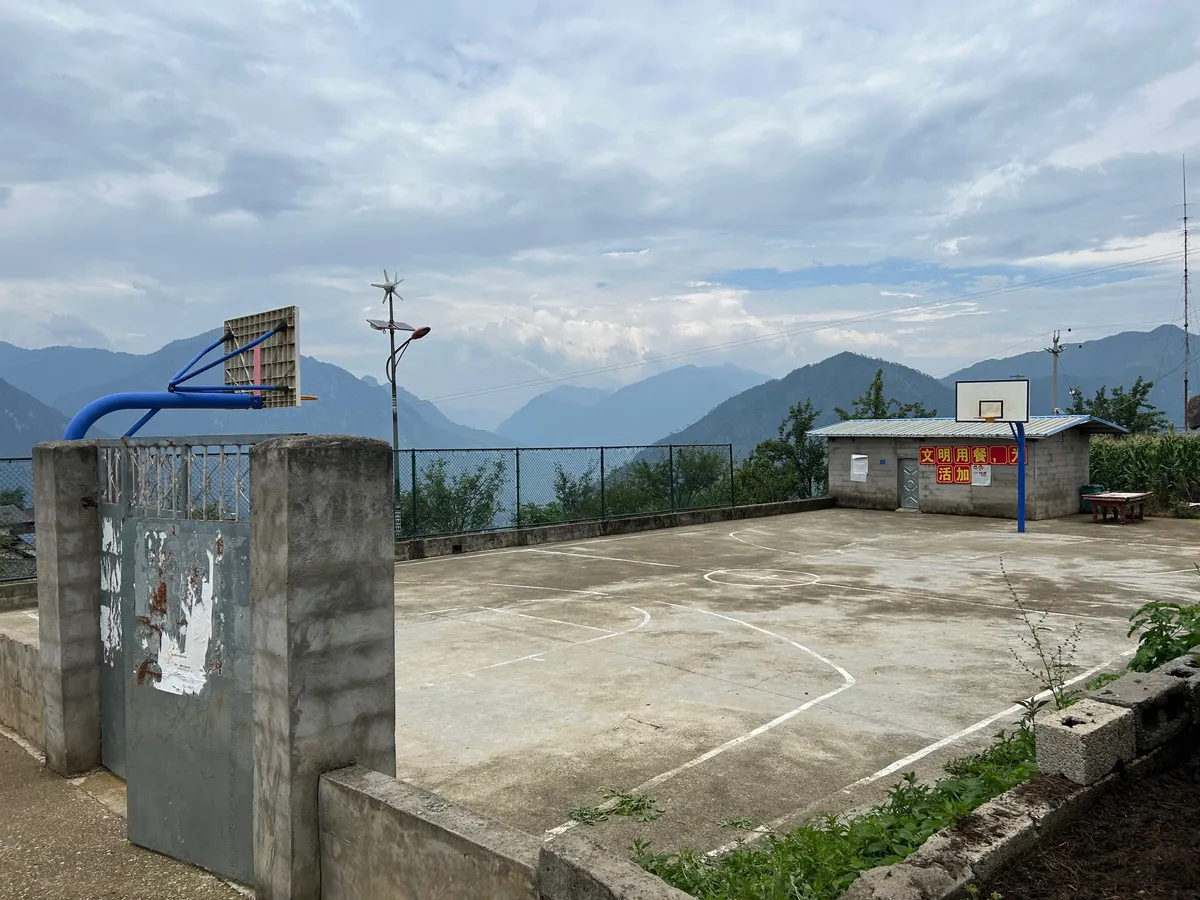
Maha’s top village revealed stunning views and the surreal sight of a basketball court and pool table perched on a mountaintop. The middle village housed everything from a post office, to social security, to the local nurse’s office in a single government building. From what I could tell, the lower village is more or less contiguous with the middle village.
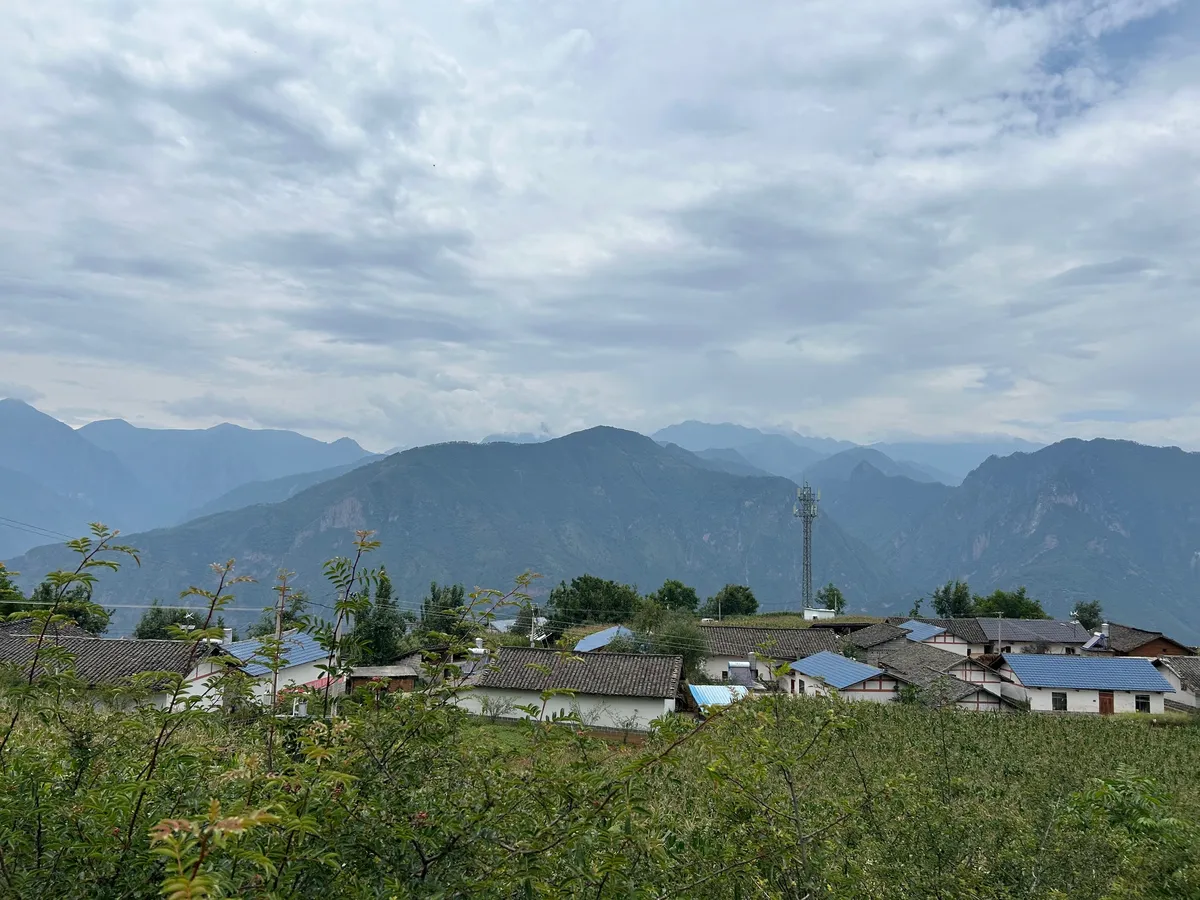
We visited during a working day, so each part of Maha was largely empty except for farmers in the fields and a repair crew scaling a mobile phone tower. Most people we met along the way were incredibly warm and friendly, though there was considerable back-and-forth with our driver to bridge the language gap from their local Nuoso (ꆈꌠꁱꂷ) language and Mandarin.
I have to confess, no one we met on the journey seemed to remember a thing about Logan Jack and his travelling gang from 1900. With luck, when Antony Anderton returns in the future, he will be able to dig up some deeper connections. I love the project and was happy to contribute in a little way!
I'm very excited for when Anthony's project is complete. You can follow its progress here